
Bonus Tokens
Coming soon...
Non-veg thali cost drops 1% in March, but veg thali...
M Rediff
Staff Writer · M Rediff
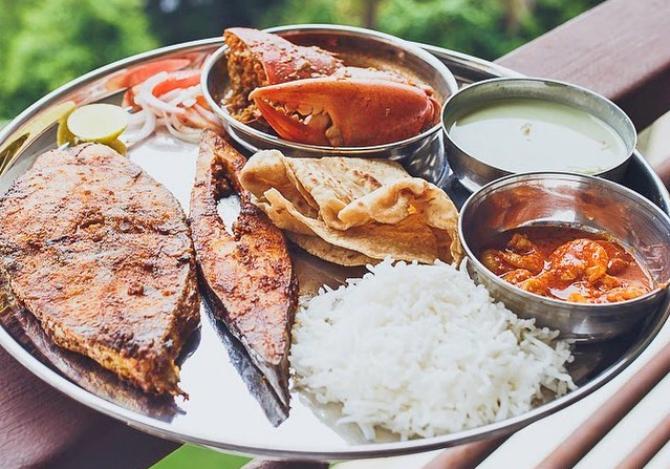
Image courtesy M Rediff
The cost of a home-cooked non-vegetarian thali fell by one per cent year-on-year in March 2026, while the price of a vegetarian meal remained stable during the same period.
This difference in pricing emerged as lower costs for staples such as onions, potatoes, and pulses effectively offset the rising expenses associated with tomatoes, vegetable oil, and fuel.
Non-veg thali cost drops 1% in March, but veg thali...
According to the latest Roti Rice Rate report from Crisil Intelligence, the average cost of preparing these meals was calculated based on input prices prevailing across North, South, East, and West India.
The monthly indicator report reflected the impact of these price shifts on the common mans expenditure, identifying specific ingredients like cereals, broilers, and spices as the primary drivers of change.
Cost of non-vegetarian thali fell 1% on-year in March, while that of vegetarian thali remained stable, as lower prices of potatoes, onions and pulses offset higher costs of tomatoes, vegetable oil and fuel, the report stated.
A significant factor behind the flat pricing of the vegetarian thali was a sharp spike in tomato costs. Prices for the vegetable rose 33 per cent year-on-year to Rs 28 per kg in March 2026, up from Rs 21 per kg in March 2025.
This increase was driven by delayed transplantation in key producing regions, including Karnataka and Andhra Pradesh, which adversely impacted crop development, yield, and the timing of arrivals in the market.
Conversely, onion prices fell 25% on-year due to excess supply from overlapping late kharif arrivals and rabi harvest, coupled with weak exports, leading to distress sales given the limited shelf life of late kharif onions, the report noted.
More from IN : FINANCE

President Droupadi Murmu Approves Bill Making Amaravati Sole Capital of Andhra Pradesh
Newsonair Gov • 4 hours ago
India News | Petroleum Ministry Doubles Allocation of 5 Kg LPG Cylinders for Migrant Labourers
Latestly • 7 hours ago

You've inspired the world: Trump speaks to Artemis II crew
M Rediff • 8 hours ago

Artemis II breaks Apollo 13's distance record with daring moon flyby that included solar eclipse
Thehindubusinessline • 8 hours ago